What Is Senko Hanabi? The Japanese Sparkler and Its Stages of Sparks
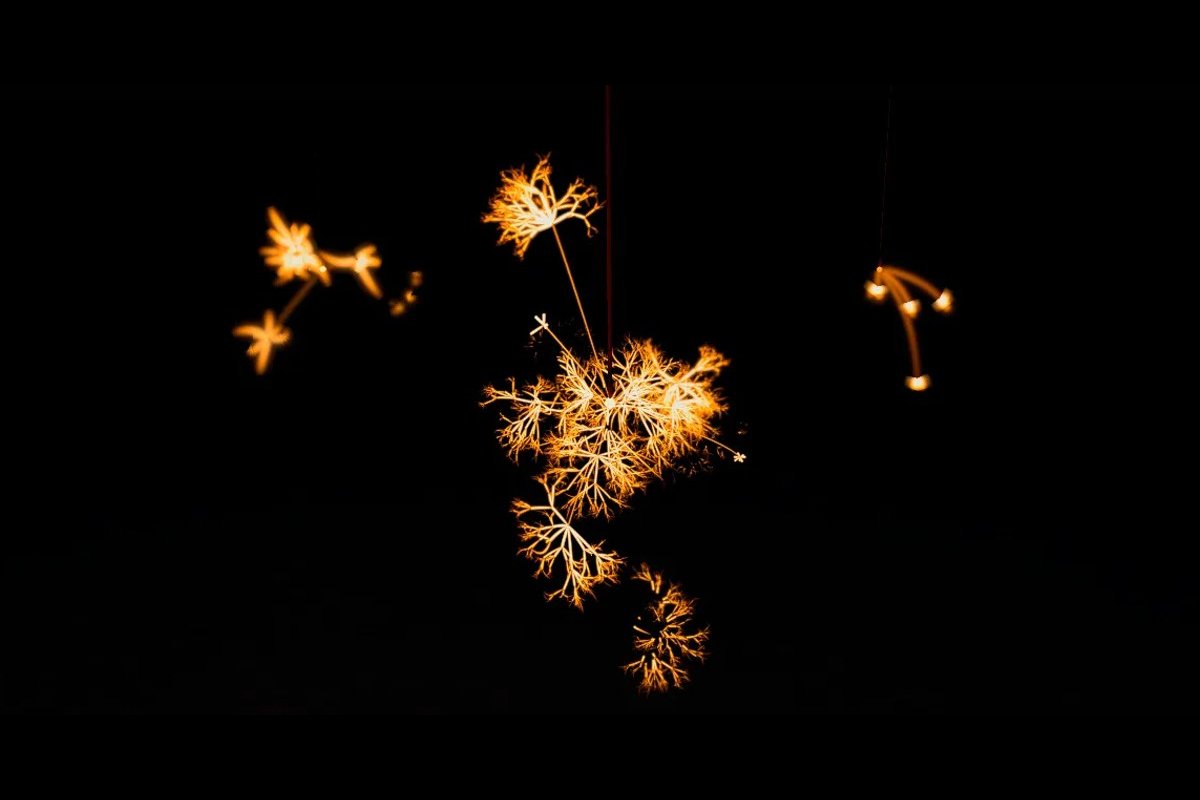
Senko hanabi (線香花火) is a small hand-held sparkler that many people in Japan light at the end of a summer evening. It is a very quiet kind of firework: a thin twist of paper or a stalk of straw, a glowing bead at the tip, and sparks that change shape as the bead burns down.
If you searched for the name after seeing it in a film, an anime or a photo, this page explains what it is, why the sparks change, and how you can light one even if you are not in Japan.
1. What the name means
Hanabi is the Japanese word for fireworks; written literally, it means "fire flower." Senko means incense stick. The usual explanation is that the sparkler looked like the incense sticks offered at Buddhist altars, and that early straw sparklers were stood in incense burners to be watched.
2. Two traditional kinds
- Subote botan: gunpowder on the tip of a rice-straw stalk. This is considered the original form, and it has long been popular in western Japan, where rice straw was easy to find. It is usually held pointing slightly upward.
- Nagate botan: gunpowder wrapped and twisted in thin washi paper. This is the kind most people know today, and it spread in eastern Japan. It is held pointing down at an angle.
Senko hanabi was already enjoyed during the Edo period (1603–1868). Who first made it is not recorded.
3. The stages of sparks
A single stick burns for around a minute, and in that time the sparks pass through stages that have been given the names of plants and flowers. Makers describe them like this:
- Tsubomi (bud): right after lighting, the powder melts into a small red bead that trembles at the tip. There are almost no sparks yet.
- Botan (peony): the bead grows brighter, and short sparks shoot out in every direction.
- Matsuba (pine needles): the most active stage. Sparks fly out and split again and again, like branching pine needles.
- Yanagi (willow): the force drops, and the sparks bend down in long lines like the branches of a weeping willow.
- Chiri-giku (scattered chrysanthemum): only a few small sparks are left, falling apart like loose chrysanthemum petals.
At the end, the bead either drops to the ground or slowly loses its light while still clinging to the tip. Because a breath of wind or a shaking hand can make the bead fall early, people often hold the stick as still as they can and try to see it all the way to the end.
The sparks are tiny molten droplets thrown out of the bead. Many of them burst again in mid-air, and the new pieces burst once more, which draws the branching shapes of the pine-needle stage. Researchers in Europe and Japan have studied this since the 19th century, and how the shape changes over time is still a research topic.
4. Tips for lighting a real one
- Choose a place with no wind, and keep a bucket of water nearby.
- Light only the very tip, then keep your hand still.
- Hold a paper (nagate) sparkler pointing down at an angle, and a straw (subote) sparkler slightly upward.
- Follow the safety instructions printed on the package.
5. Lighting one online with keensense
keensense has a senko hanabi you can light in your web browser. Click (or touch the screen) to light it. The bud, peony, pine-needle, willow and scattered-chrysanthemum stages follow one another, and each stick burns for 50 to 90 seconds. Every stick burns a little differently: sometimes the bead drops, and sometimes it clings and fades.
You can also light them with someone far away. Open the chat at the bottom right and use the invite button to share the link. Up to 10 people can be in one room, and each person's sparkler glows side by side in the same dark.
Sources: Tsutsui Tokimasa Fireworks on Google Arts & Culture, Wikipedia: Senko hanabi, Weathernews (Japanese), Journal of the Combustion Society of Japan, Vol. 60 No. 193.