A waiting room for a mental health clinic: reduce stimulation, help people feel safe
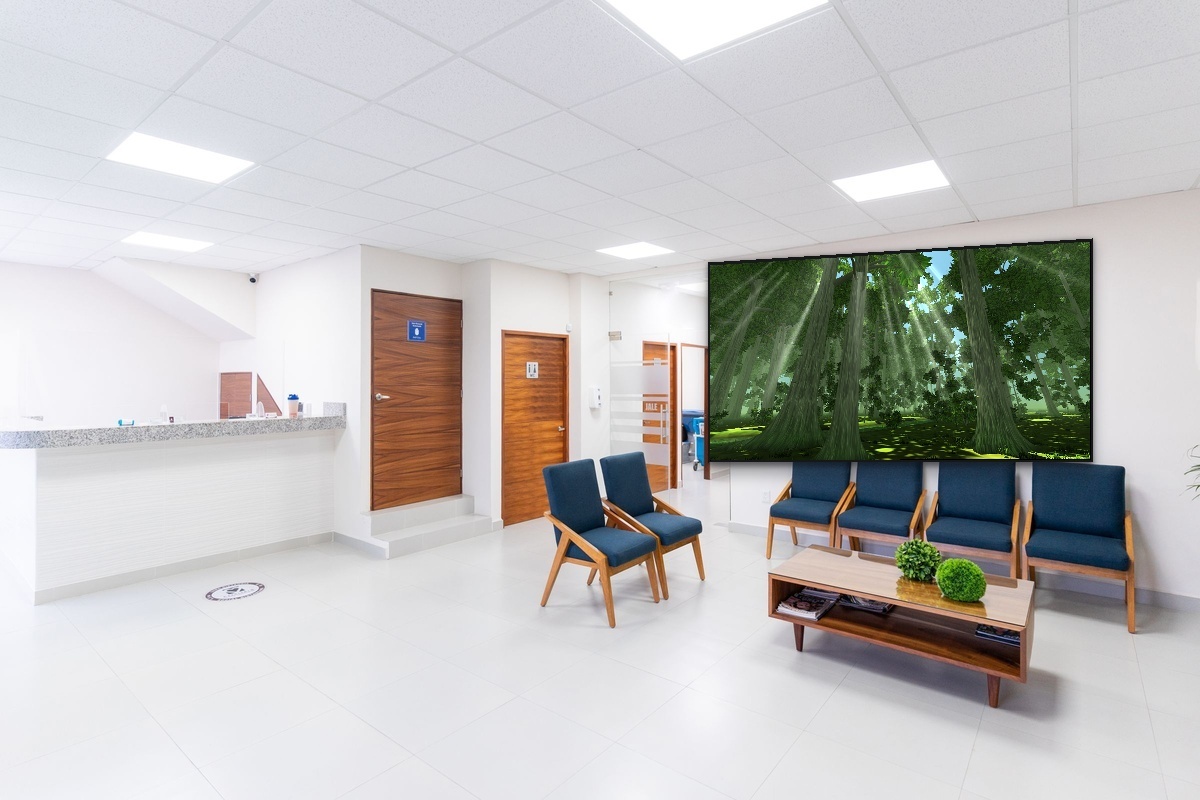
People who come to a psychiatry or mental health clinic may be anxious, tense or tired. For someone visiting for the first time, opening the door can already be a big step. This article looks at how to reduce stimulation so that people can wait with some peace of mind.
This is general advice about the waiting-room environment, not advice on treatment.
Reduce eye contact
- Avoid seats that face each other. Facing chairs make eye contact easy. Mix in rows that face the same way and seats that face a wall.
- Keep reception conversations out of earshot. Names and symptoms should not carry into the waiting area.
- Seats for one. A seat a little apart, or one with a partition, helps some people feel safe.
Sound and light
Some people are very sensitive to sound and light. Avoid sudden loud noises, glaring lights and flashing; dim the lights a little and keep sounds low. More ideas are in a waiting room that is kind to people sensitive to sound and light.
What to show on a screen
News and daytime shows are full of incidents, disasters and strong language, which can raise anxiety (what to show on a waiting-room TV). If you put in a screen, calm scenery without sudden changes is a better fit.
In a study at a Czech cancer institute, 117 patients in an outpatient waiting room watched a forest, sea or news video. Those who watched the forest or sea reported improved mood and lower arousal, while the news group showed no significant change. It was a small pilot study, but it is a useful reference when thinking about what to show in a waiting room.
Some people dislike screens themselves, so keep seats where the screen is out of sight, and let people choose.
keensense, for comparison
keensense is a service run by the people who wrote this article. It shows natural scenery in a web browser. The scenes are calm scenery only, with no sudden surprises, text or ads, and the sound can be muted.
- Setup: open a dedicated URL in the browser of a TV, tablet or PC you already have. No account, sign-up, installation or special hardware (an internet connection is required).
- Scenes: campfire, candle, forest (five times of day), beach, park (cherry blossoms in spring, autumn leaves), night sky and a sea of clouds. A venue can choose one, or let the scene change automatically every 15, 30 or 60 minutes.
- Price: $69 per month or $690 per year. One license covers one location, with any number of screens inside that facility. A 7-day money-back guarantee applies if it doesn't work on your equipment or network.